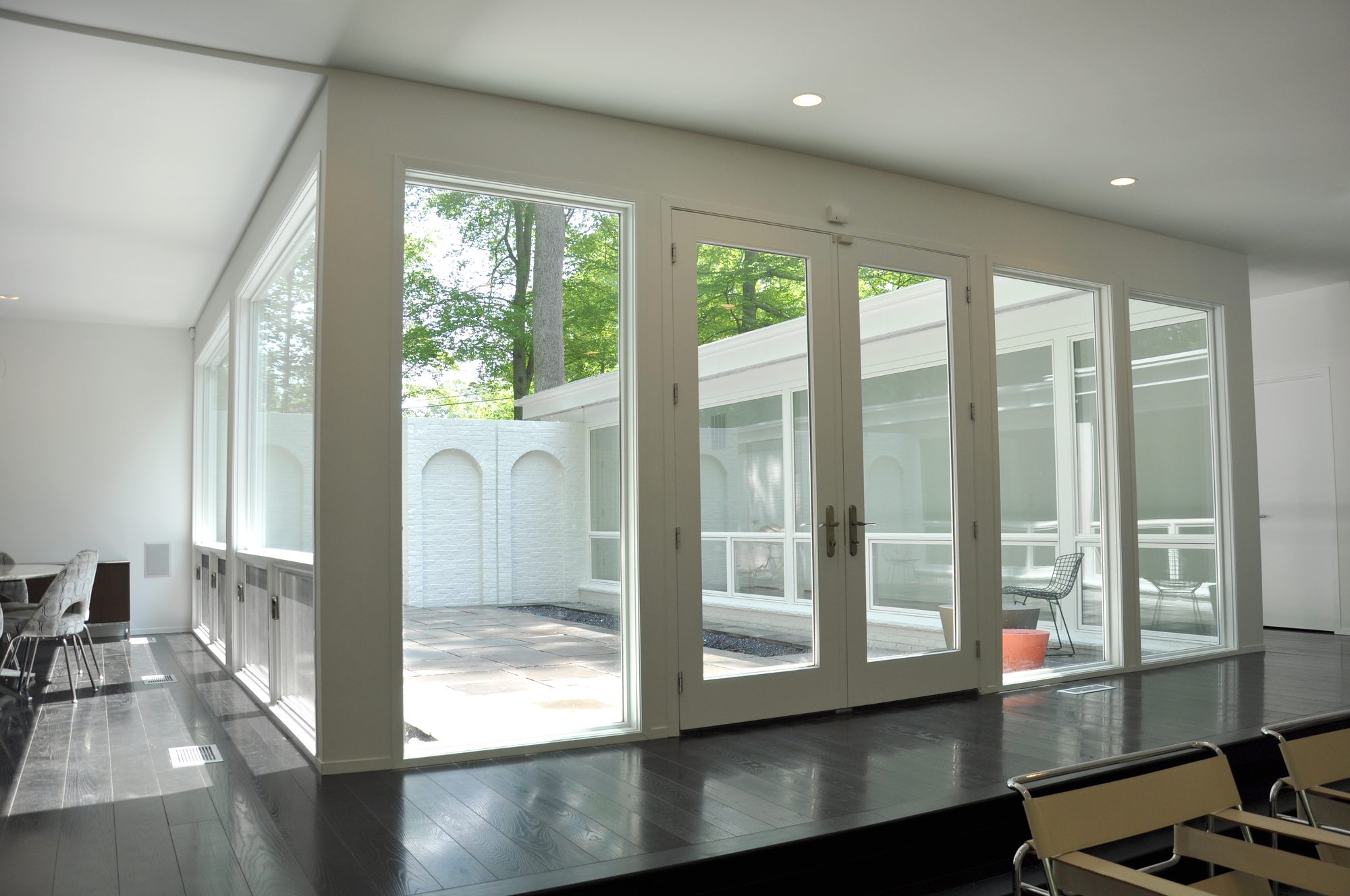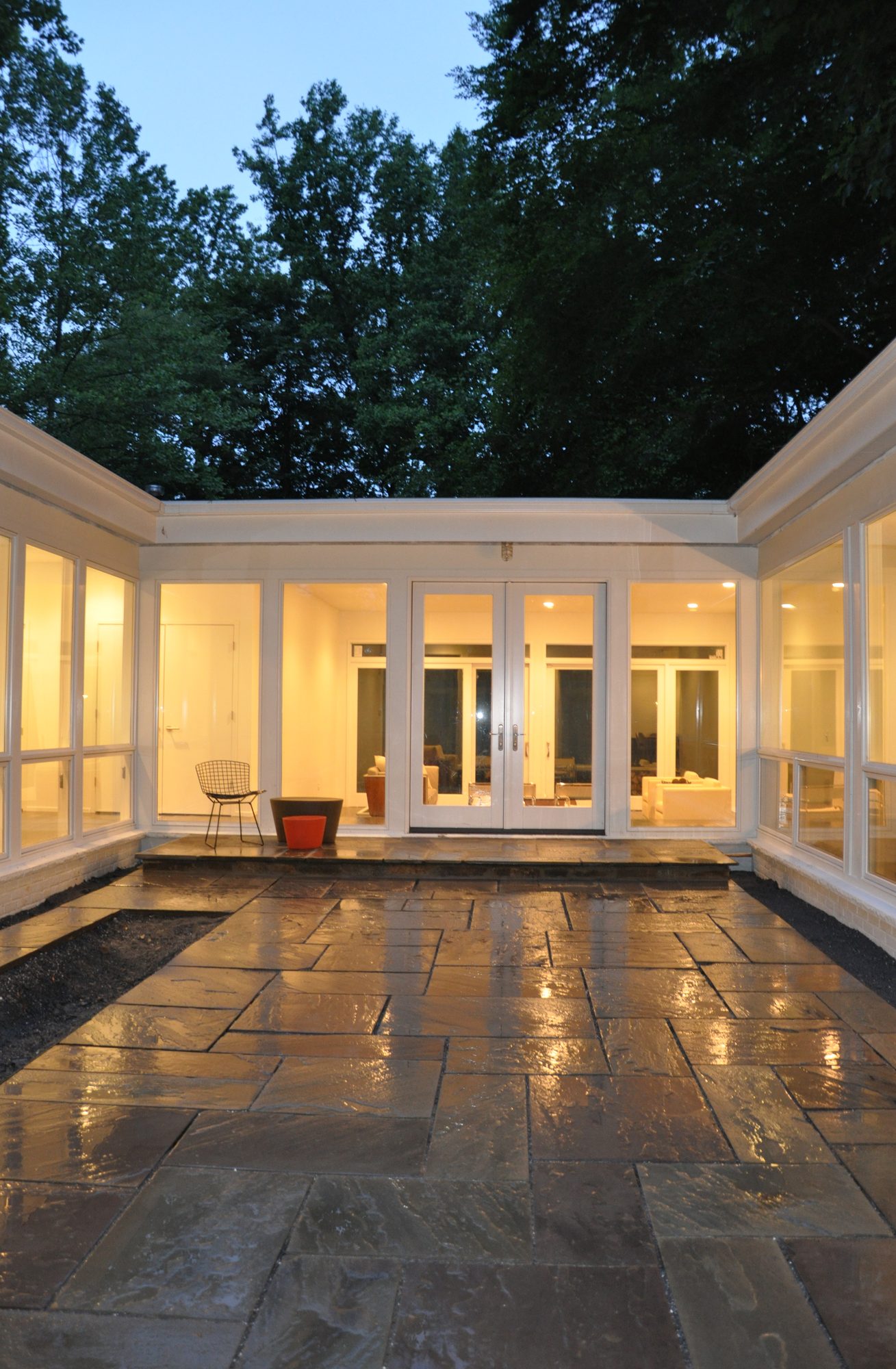
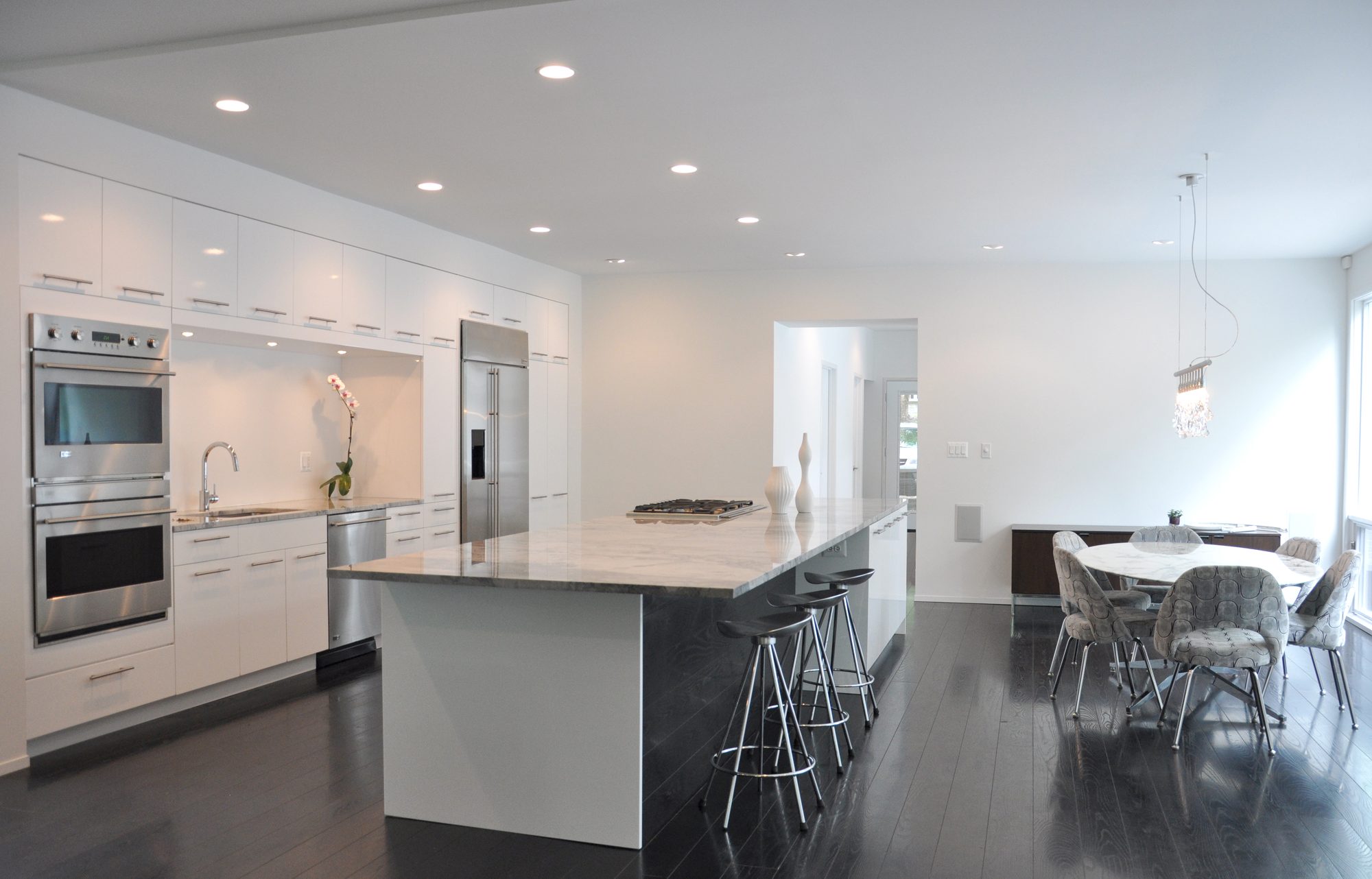
The word sustainable has been worn smooth by marketing. It gets attached to countertops and paint colors until it means almost nothing. For a house, though, real sustainability is not complicated, and most of it is invisible. It lives in four places: the building envelope, the energy the house uses, how long the house lasts, and the carbon already spent building it. Get those right and the rest is detail.
Comfort is built into the walls
The least glamorous move is the most important one. A tight, well-insulated, carefully air-sealed building envelope does more for comfort and energy than any appliance you can buy. It keeps rooms an even temperature, keeps the street quiet, and shrinks the heating and cooling bill before a single efficient gadget is installed. The envelope is the part no one photographs and the part that decides how the house actually performs for the next fifty years.
A modest overhang shades the high summer sun and welcomes the low winter sun. Orientation is free performance.
The greenest move I make on most projects is the one no one photographs: keeping the structure that is already standing and making it work harder. The carbon in those walls is already spent. The craft is in spending as little new as the project truly needs.
The carbon already spent
Here is the idea that reframes everything. Carl Elefante, who served as president of the American Institute of Architects, is known for a single line: the greenest building is the one already built. Every existing house represents enormous energy and carbon already invested in its materials and construction. Tearing it down to build new throws all of that away and spends a fresh round of carbon on the replacement. Keeping a sound house and making it perform is often the most sustainable choice available, and it rarely gets counted as one.
The greenest building is the one already built.
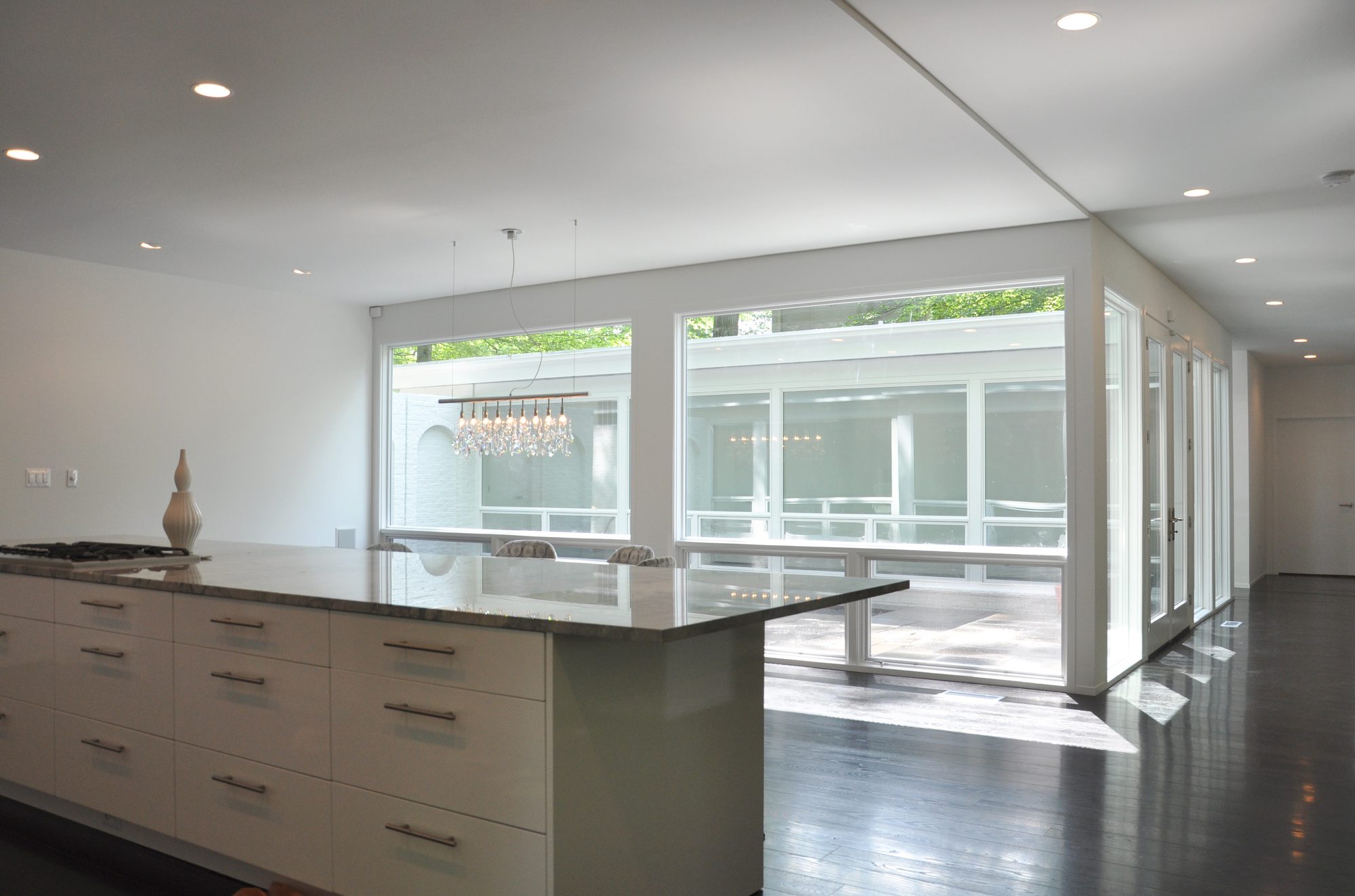
Electrify where it earns its place
When new systems do make sense, the order matters. Seal and insulate first; then a right-sized heat pump, induction cooking, and, where the roof and the math agree, solar. Done in that sequence, each move pays off, because you are heating and cooling a house that no longer leaks. Done in the wrong order, you are buying efficient equipment to fight a building that works against you. Green design is less about products than about doing the plain things in the right order.
For a Mid-Atlantic house, with real summers and real winters, that discipline is what separates a house that simply looks current from one that will still feel right, and run cheaply, decades from now.